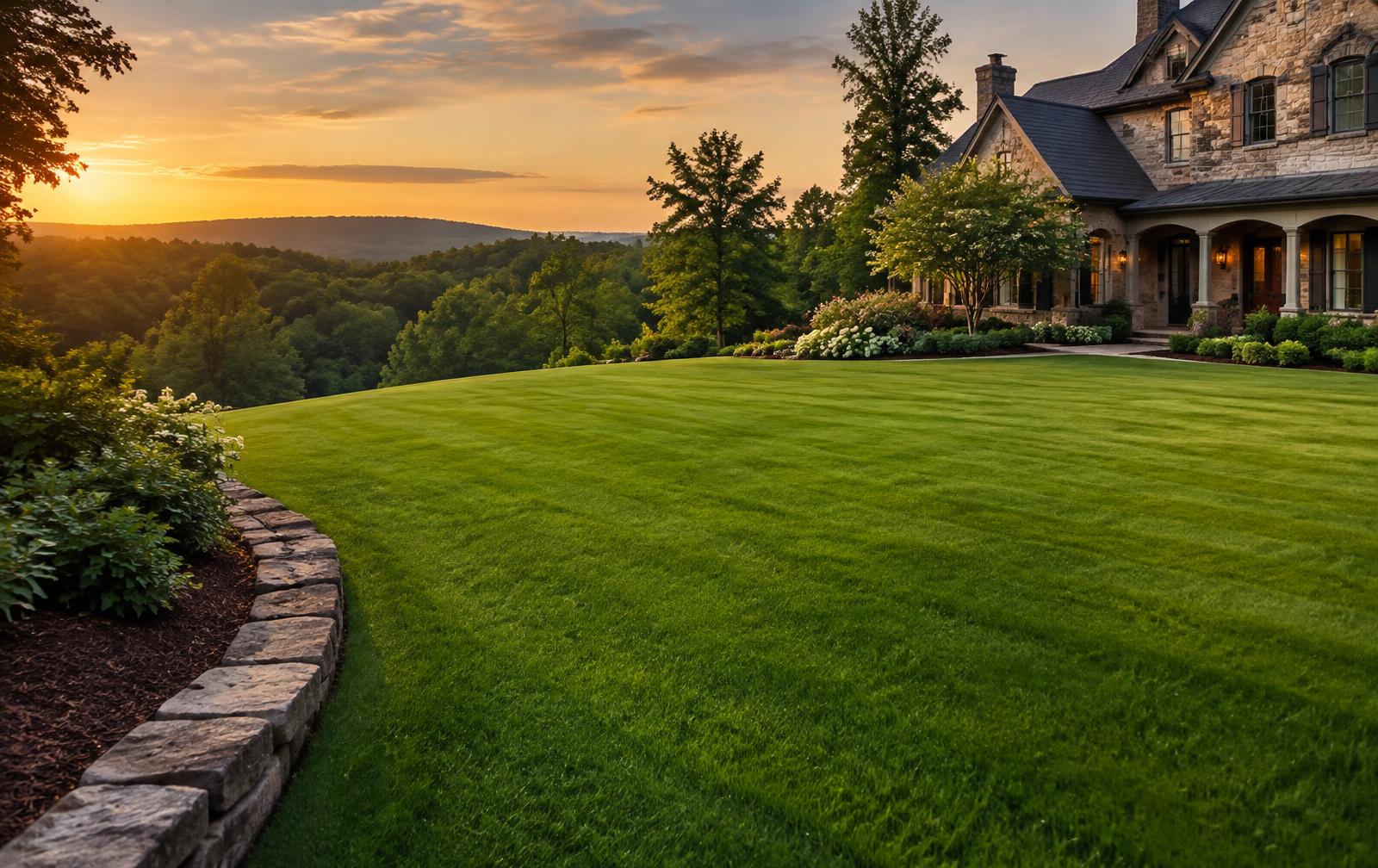
Warm-season and cool-season grasses compared for sun, shade, foot traffic, and upkeep.
North Georgia sits in a transition zone
Summers favor warm-season grasses, while cooler winters at higher elevations allow cool-season fescue. The best choice depends on sun, use, and how much maintenance you want.
Common options
- Bermuda — very sun-loving and traffic tolerant; spreads aggressively; goes dormant and tan in winter
- Zoysia — dense and attractive, more shade tolerant than Bermuda; slower to establish
- Centipede — lower maintenance, prefers acidic soils; not for heavy traffic
- St. Augustine — tolerates some shade; less cold hardy, better suited to warmer areas
- Tall fescue — stays green much of winter and handles shade; can struggle in summer heat
Match grass to the site
Most warm-season grasses need several hours of direct sun daily. Heavily shaded areas may do better with fescue or planting beds instead of lawn.
Soil and timing
A soil test guides lime and fertilizer. Warm-season sod establishes best in late spring and summer; fescue is usually planted in fall.
This guide is general information. Site conditions, codes, and permit requirements vary — confirm specifics for your property before starting work.