
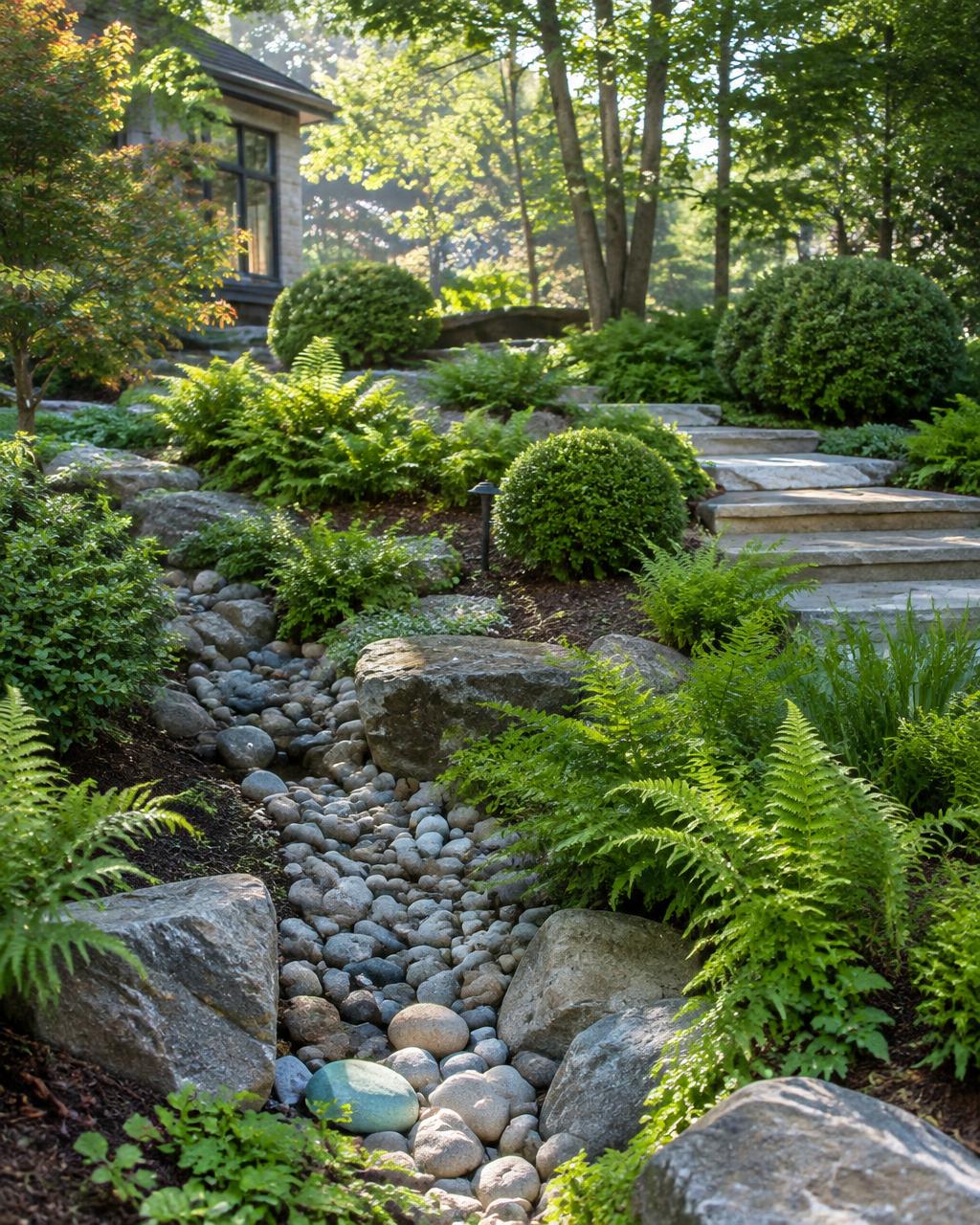
Why red clay and sloped lots cause standing water and erosion, and how drainage problems are usually solved.
Why clay soils hold water
Much of North Georgia sits on dense red clay that absorbs water slowly. During heavy rain, water runs across the surface or collects in low spots rather than soaking in.
Signs worth paying attention to
- Standing water more than a day after rain
- Soil washing out at the base of slopes or beds
- Water staining or dampness in crawlspaces and basements
- Gutters overflowing or downspouts discharging against the foundation
- Mulch or gravel migrating across walkways
Common solutions
The right fix depends on where water comes from and where it can legally and safely go.
- Regrading to move surface water away from structures
- Extending and burying downspouts
- French drains to collect subsurface water
- Catch basins and channel drains for hard surfaces
- Dry creek beds that manage flow while adding character
Know where the water goes
Water should be discharged somewhere appropriate — not onto a neighbor's property or into a spot that creates a new problem. Some work near streams or in regulated areas requires local approval.
This guide is general information. Site conditions, codes, and permit requirements vary — confirm specifics for your property before starting work.