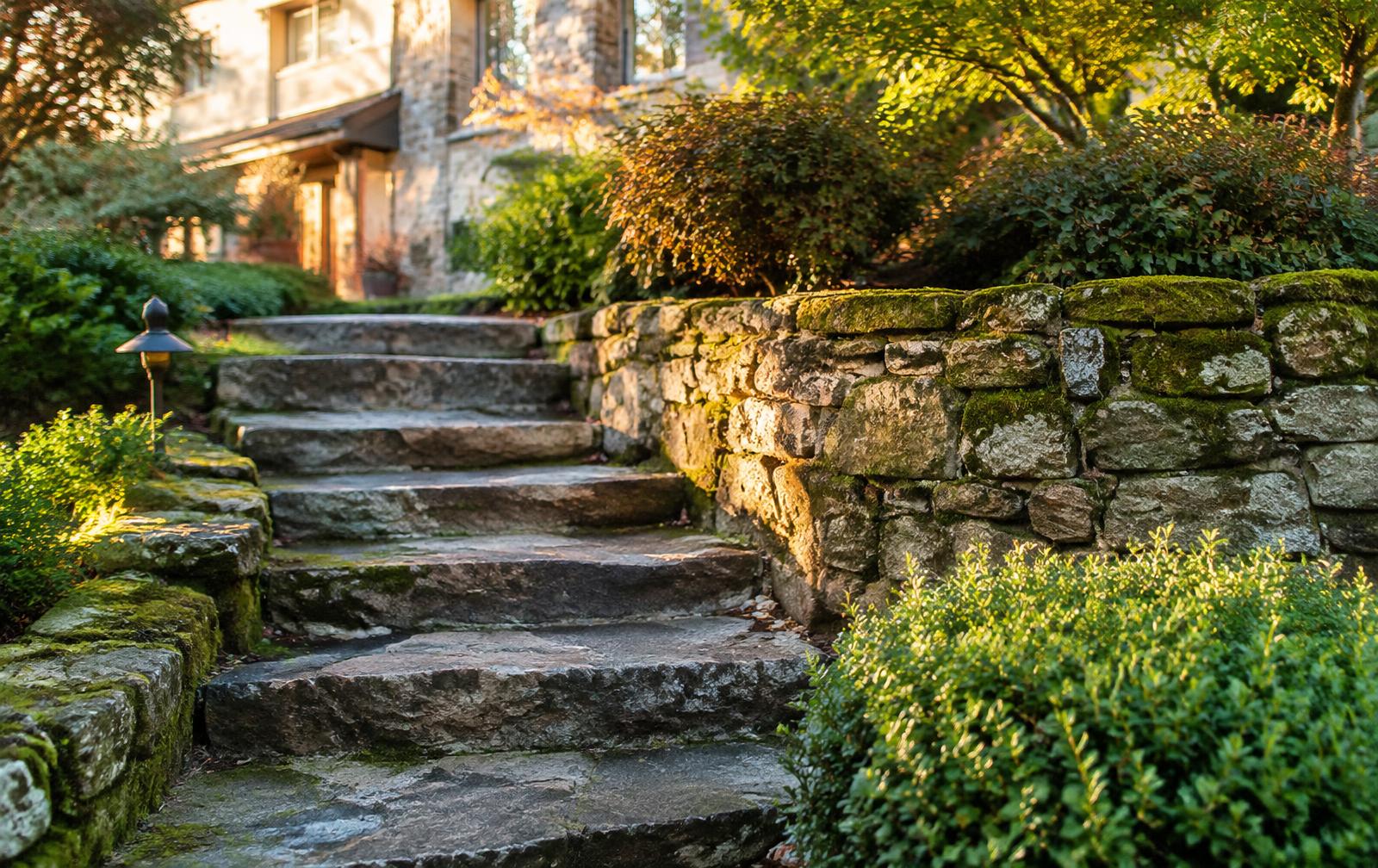
How the three most common patio surfaces compare on appearance, durability, upkeep, and repairs.
Start with how you'll use the space
Dining, lounging, a fire feature, or a path to the pool all put different demands on a surface. Think about furniture, foot traffic, shade, and whether the patio connects to a door or a lawn.
Concrete pavers
Manufactured units laid on a compacted gravel base with sand-set joints. They come in many shapes and colors and flex slightly with ground movement instead of cracking.
- Individual units can be lifted and reset for repairs
- Joint sand needs occasional topping up
- Color can fade gradually in full sun
Natural stone
Flagstone, bluestone, granite, and other quarried stone offer variation no manufactured product matches. Stone can be dry-laid on gravel or set in mortar on a concrete slab.
- Typically higher material and labor cost
- Some stones get hot in sun or slick when wet — ask about finish
- Very long-lasting when properly installed
Poured concrete
A continuous slab, finished broom, smooth, exposed aggregate, or stamped. Often the most economical per square foot for simple shapes.
- Control joints manage — but don't eliminate — cracking
- Repairs are harder to blend in
- Sealing helps resist stains and freeze-thaw wear
What matters more than the material
In North Georgia clay, base preparation and drainage decide how a patio performs over time. Proper excavation, compacted aggregate, and a slight slope away from the house matter regardless of surface.
This guide is general information. Site conditions, codes, and permit requirements vary — confirm specifics for your property before starting work.